
How do I know when it’s time to euthanize my pet?
Deciding “it’s time” is the hardest choice you’ll have to make as a pet owner. While there’s not an easy answer, we find the best decision-making tool is a quality of life assessment. Ask yourself questions like:
“Is my pet having more good days than bad?”
“Is my pet still enjoying life?”
“Is my pet in pain?”
When & how: What’s best for my pet?
Here’s our guide to understanding your pet’s pain and how it relates to their quality of life. With these tools, you can create your own assessment of your pet’s quality of life – one that is 100 percent unique to them.
In-home euthanasia allows your pet to pass peacefully in the environment where they feel most loved and comfortable – your home. You’re spared the experience of driving your pet to the vet and saying “goodbye” in an environment that may be stressful or unfamiliar. Electing in-home euthanasia allows you to focus solely on your pet and offers a low-stress, peaceful transition.
During your pet’s final chapter, it’s normal to consider allowing your pet to pass on their own instead of electing euthanasia. Answering this question is also a matter of considering your pet’s quality of life in their final moments.
While this decision may come with complex emotions, euthanasia ensures your pet’s experience is as gentle and peaceful as possible, as the process is designed to promote a tranquil and comfortable passing.
When it comes to a pet passing naturally, the reality is: most pets don’t pass peacefully “in their sleep.” The experience for both pet and family can be distressing in certain instances, and because of this, many pet owners choose euthanasia to help their pets die peacefully. Euthanasia can be looked at not as shortening a pet’s life but as shortening a pet’s death.
The only thing you need to do to prepare is focus on your pet and give them lots of love. We care for all the details, including:
- Providing soft blankets and “potty pads”
- Arranging transportation and cremation, if elected
- Notifying your primary veterinarian, so you don’t need to make that difficult call
You do not need to provide any additional items or preparation materials.
We understand this is an emotional time, and one that cannot be rushed. Before the euthanasia process begins, you will have all the time needed to ask questions or discuss your decision with the veterinarian.
Families appreciate that we don’t do anything clinical that would interrupt the intimate moment they are experiencing, such as shaving fur, placing an IV catheter, or taking their pet out of their arms. Once your pet is in a comfortable position, the veterinarian will administer a fast-acting sedative, which will gently relax them into a state of unconsciousness where they cannot feel any pain or anxiety. You’ll notice your pet will begin to relax as the sedative reaches its full effect, generally within 5 minutes. Once your pet is fully asleep, the veterinarian will administer the euthanasia medication.
For most pets this injection is administered into the liver, which allows for a gentler and more peaceful passing over the course of 5-10 minutes. Alternatively, an injection into a vein can be given, where death will occur in a matter of seconds.
An organ injection may be the preferred method in some cases, as it can allow families several minutes to remain with their pet and say their final goodbyes, rather than the process occurring within seconds as it often does with an IV injection.
Sometimes, it’s common for pets to urinate or defecate, take a final breath, twitch, or keep their eyes partially open. These are all normal and your pet will not be in pain or have awareness these functions are happening. Finally, the veterinarian will check your pet’s vital signs to confirm their death.
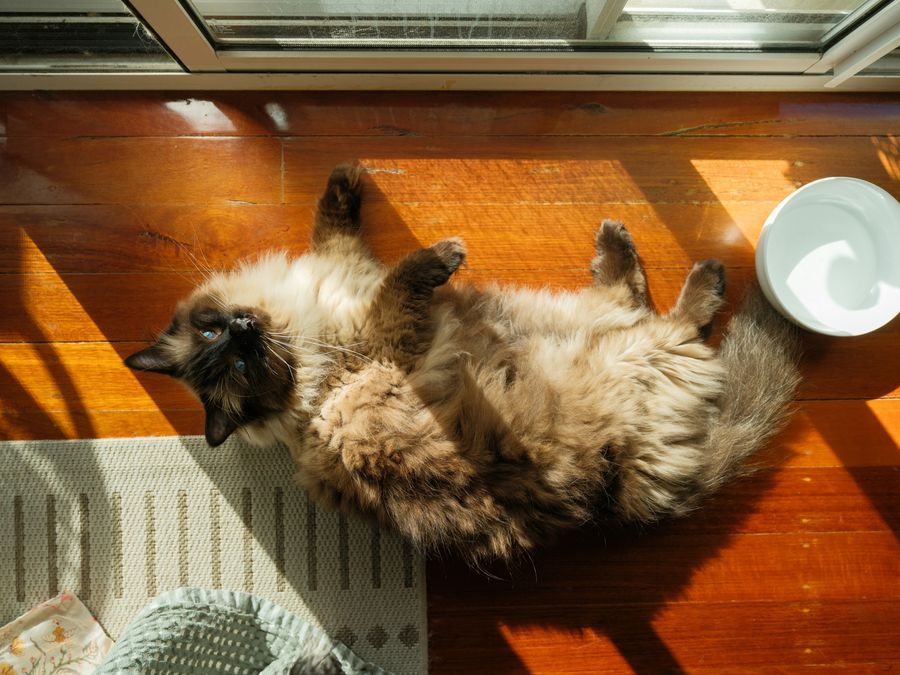
The in-home euthanasia process can essentially take place anywhere in your home where you and your pet are comfortable. This may be a sunny spot by the window, a cozy part of your living room, or anywhere else where they feel relaxed.
Children should ideally have the opportunity to say goodbye to their companion, whether it be before or during the euthanasia process. In our experience, children over five years old are amazingly present and engaged and understand what’s going on. However, children under the age of five may be unsure of what’s going on and may become upset by their parents’ emotions during this difficult time.
Of course, this decision is ultimately the choice of the parent. You can choose to have your child in the room, in a different room within the home, or absent during the process. Whatever choice you make, keep in mind that open communication will be key to managing your child’s experience.
In our experience, we find other household pets absolutely need this time to say goodbye, just like any family member.
Most pets seem to understand what is going on and will sit quietly and attentively, honoring the process much in the same way you do. If you feel your pet may be disruptive to the process, they can be placed in another room and allowed to say goodbye once their friend has passed. Being able to see and smell their friend allows for closure, which is important in the grieving process.
You can feed your pet or offer their favorite treats if they are eating. On rare occasions, nausea can happen following sedation, but this is generally due to either your pet’s underlying disease process or sensitivity to medication, not the fact that you let your pet enjoy a favorite treat or meal.
Generally, the only medications we recommend you give your pet on the day of euthanasia are “comfort medications” such as pain or anti-nausea medications, if you are giving them, and they will not interfere with the euthanasia process.
It’s common for some pets to feel intimidated around new people. That’s why we developed a specialized approach to reduce anxiety and create a low-stress environment. In the situation where a pet may be extra nervous, or potentially prone to biting, please let our care coordinators know.
Death is complex, and the short answer to this question is, “not exactly.” Toward the end of their life, your pet will likely be aware they are sick or experiencing discomfort, which may result in unusual behaviors. While it’s impossible to know if and how pets actually perceive death, what we do know is they’ll experience the love and comfort you provide in their final moments.
Your pet will absolutely feel your gentle affection and soothing voice as the process begins. Once the first sedation medication is administered, however, your pet will lose consciousness, which means they can no longer experience what’s happening around them. The last thing your pet will experience is your loving goodbye.
Next steps: Aftercare
Aftercare refers to the steps taken following euthanasia. You’ll have the choice between several memorial options, as described in the next section. If you elect a cremation option, we will gently and respectfully transport your pet to the facility following your appointment. If you elect a home burial or alternative option, your pet will remain with you.
Your pet will be cremated privately, and their ashes will be returned to you. From there, you can choose what to do with your pet’s ashes, whether it be keep them in a beautiful urn, scatter them at a special place, or something else that’s meaningful to your family.
Your pet will be cremated with other pets, and the ashes are typically scattered together in a peaceful location.
Aquamation is the process of returning your pet to nature through a water-based dissolution system.
As an emerging alternative to traditional cremation, it’s available in certain locations across the country. If you're interested in this aftercare option, ask your veterinary team what's available in your area.
You and your family will bury your pet. We advise you to check your local ordinances and restrictions before choosing a final resting place.

Grief and memorialization
We understand the complex and often overwhelming emotions you’ll face when making difficult decisions and following the loss of your pet. It’s important to surround yourself with tools, resources, and community to help you navigate your grief journey and pave a path forward.
There are several options to honor the beautiful bond you shared with your pet, so you can cherish your memories for years to come.
Preserve their precious paw print by making an imprint before passing.
Ask your veterinary team about memorial keepsakes, such as a paw print or other personalized remembrance, if available.
Host a pet memorial or celebration of life with the people and pets they loved.
Plant a tree or flower bed in your pet's honor, or order or create a personalized memorial stone for your garden.
Frame your favorite photo of your pet in a special place of your home or create artwork or a memory box with their leash, collar, and favorite toy.

Important Notice: The information provided on this page is for informational purposes only and is not a substitute for professional veterinary advice. Always consult a veterinarian with any questions regarding your pet's health or medical condition. Never disregard or delay seeking professional veterinary advice based on information from this page.