
Ask any vet or behaviorist, and they’ll tell you that a pup’s first three months of life are key when it comes to socializing a puppy. Having rich and varied social experiences in their puppyhood improves a pup’s odds of growing into a balanced, confident adult dog — and who doesn’t want that for their pup?
Sure, an introverted pup who only likes you is adorable in theory — but the reality of a fearful, bite-y dog is way less cute. The truth is, it’s not fair to you or your puppy to leave them without the tools they need to get along in this world, even if they will only ever know the sweetest parts of life (as it should be).
Socialization as a concept is often misunderstood, and that confusion gets in the way of starting puppies off right. Here’s what you need to know to properly socialize your new puppy.
When should I start socializing my puppy?
The most effective puppy socialization period takes place between weeks three and 12 of the puppy’s life; then, it slams shut. Given that the last combination vaccine (against distemper, hepatitis, parvovirus, parainfluenza, and coronavirus) is usually administered when a puppy is 16 weeks old, this timeline raises questions on when a puppy can safely be around other dogs.
Some veterinarians, shelters, and breeders advise new pet owners to wait until after a puppy has had their final set of vaccinations to allow them to interact with others. Unfortunately, by that time, the socialization period has ended, precluding the pup’s best shot at acquiring lifelong dog-on-dog social skills. So, what’s a pet owner to do? Let’s look at the research.
A study conducted by the University of California Davis School of Veterinary Medicine looked at the risks to partially vaccinated puppies of contracting parvo at indoor puppy socialization sessions (socials). The results were reassuring.
It seems that puppies who have had only their first set of shots are at no greater risk of being infected with parvovirus than those not attending socials. During the study, it was reported that none of the 15 puppies who contracted parvovirus had attended puppy socials, and that none of the puppies who attended puppy classes contracted parvovirus.
This dovetails perfectly with the standard of care suggested by the American Veterinary Society of Animal Behavior (AVSAB), which unequivocally recommends pet owners should begin socialization classes for puppies as early as seven to eight weeks of age, and seven days after the first set of vaccines. The American Veterinary Medical Association, the ASCPA, and other dog health and behavior experts agree.
As the ASVAB statement reads: “The primary and most important time for puppy socialization is the first three months of life. During this time, puppies should be exposed to as many new people, animals, stimuli, and environments as can be achieved safely and without causing over-stimulation manifested as excessive fear, withdrawal, or avoidance behavior.”
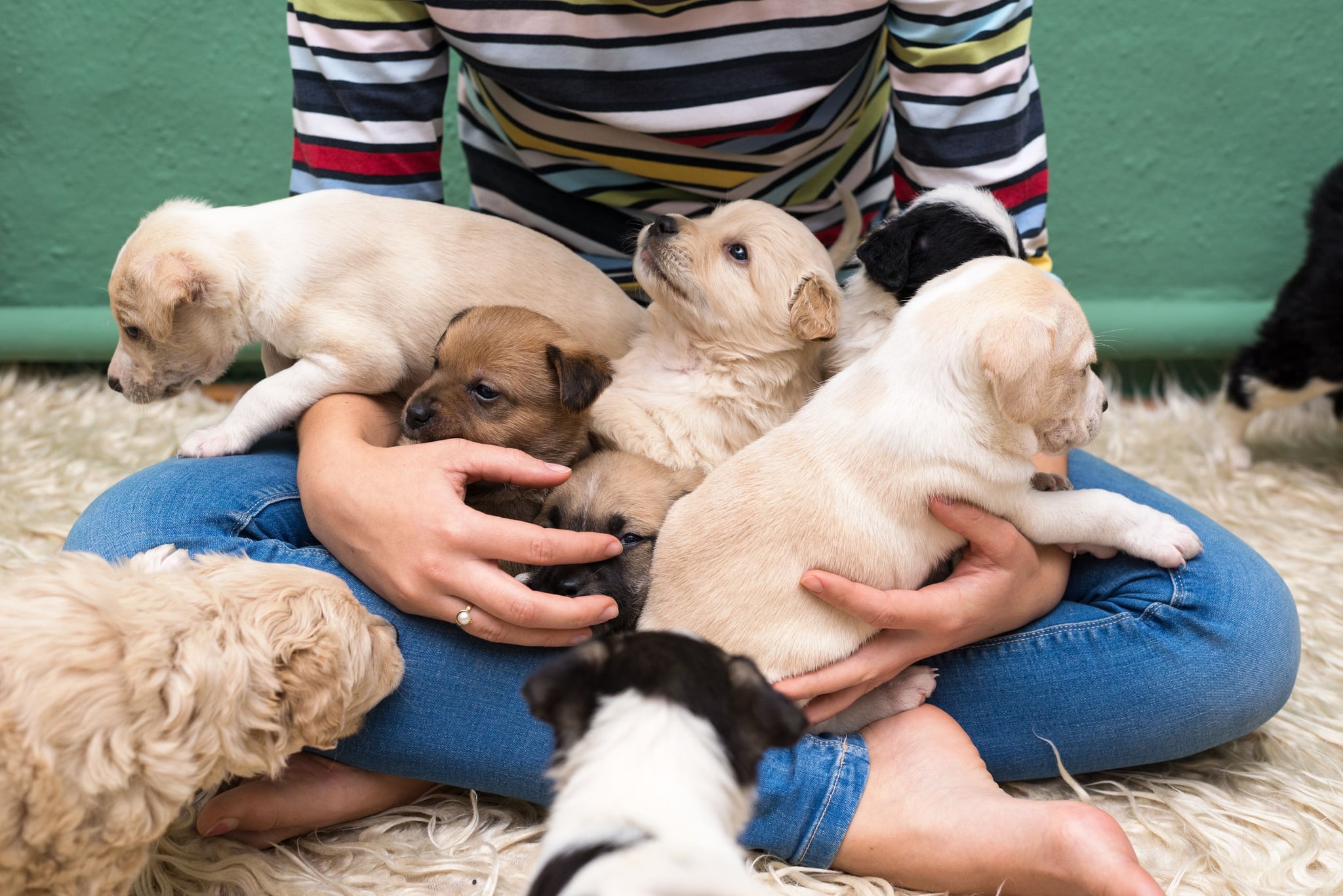
It is important to note that structured puppy socials run by a variety of training and daycare facilities and other pet-related businesses take place indoors on non-porous surfaces, and “accidents” are cleaned up immediately with an antimicrobial solution. Porous surfaces, such as dirt, sand, and, in particular, those found at dog parks, must be avoided until full vaccination.
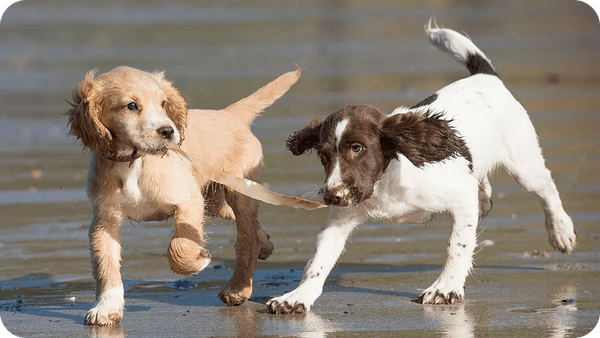
People unaware of puppy socials are more likely to take puppies to places they should not be until they’re fully vaccinated, which includes dog parks, beaches, and other settings with porous surfaces likely to harbor parvovirus-infected feces.
Understanding how puppies develop
Why is the window of opportunity so small? At the risk of stating the obvious, puppies develop much faster than humans. For example, puppies walk beautifully at three weeks, but it takes human babies about a year to reach that milestone. This acceleration affects cognitive function in dogs, which develops rapidly during the short socialization period; it’s during this time that a puppy’s framework for future social functioning evolves. A strong foundation built from a rich set of early experiences gives the puppy more context in which to evaluate and react to future stimuli in the environment, including people and other dogs.
The most important socialization period of puppies — the time during which they readily incorporate new experiences into the developing worldviews that directly affect lifelong behavior — lasts from weeks three to 12. That’s it.
Let’s break it down!
Introduce your puppy to new people
In addition to socials, a widely accepted goal is for a puppy to “meet” 100 people during these same four weeks: babies, children, elderly folks, men and women of all races, sizes and shapes, dressed in all sorts of clothing and carrying all kinds of implements — umbrellas, canes, plastic bags, etc. Wondering how to introduce your puppy to strangers? Do it at your dog's own pace, in a way that isn’t overwhelming. It's important that they get ample rest and are not overly fearful.
Puppy socialization checklist
Sit with your puppy outside and watch as friends or neighbors do their daily activities.
Have friends wear different hats, sunglasses, and odd clothing, allowing your puppy to practice interactions.
Expose your puppy to things such as shovels, rakes, skateboards, bikes, and things with different textures and sounds, etc.
Take your puppy for car rides.
Go to a grocery store and sit in the parking lot, giving treats as your puppy watches people walk around outside.
Let your puppy walk over, under, and around various obstacles with varied textures.
Important Notice: The information provided on this page is for informational purposes only and is not a substitute for professional veterinary advice. Always consult a veterinarian with any questions regarding your pet's health or medical condition. Never disregard or delay seeking professional veterinary advice based on information from this page.