

Main takeaways
• A cat's feeding amount and frequency change across kitten, adult, and senior stages.
• Match food to life stage and adjust to maintain a healthy weight.
• Wet and dry feeding amounts differ, so portions should reflect what you feed.
When it comes to your cat's health, it's hard to overstate how large a role diet and nutrition play. Of course, making sure your cat is getting the exact vitamins, minerals and nutrients they need is much easier said than done.
If you have lots of questions, or maybe even feel like you don't know what questions to ask, you're not alone. After all, everybody loves adorable furry things, but not everyone knows the optimal omega-6 to omega-3 ratio for a cat’s diet.

What to know about cat food nutrition
So where is the best place to start understanding your cat's nutritional needs? Take a look at the back of your cat's food packaging. Here are a few important things to look for:
- A high-quality protein source at the top of the ingredients list, like chicken or salmon
- Information about how the recipe supports your cat's life stage (kitten, adult, senior)
- Details about key vitamins and minerals
Once you're confident that your cat's diet includes the nutritional foundation it needs, it's time to get into some feeding tips specific to your cat.
How much should a cat eat each day?
How much — and what — to feed your cat varies based on their life stage and unique needs. Let's walk you through some of need-to-knows at each stage of your cat's life.
Feeding a kitten
Kittens may not look all that different from adult cats, but their bodies have very different nutritional requirements. First, kitten bodies burn energy at a furious pace to fuel all of that growing and playing. That's why kitten food should be more energy-dense. Kittens also need to eat smaller meals more often throughout the day, while an adult cat may only eat once in the morning and once at night.
Their food should contain certain ingredients that are crucial for their development. Amino acids like taurine are vital to the strengthening of their hearts, vision and digestion. Vitamin E helps your kitten build up a sturdy immune system. Choosing a kitten food that's scientifically formulated to fit your kitten's needs is an important part of caring for them.
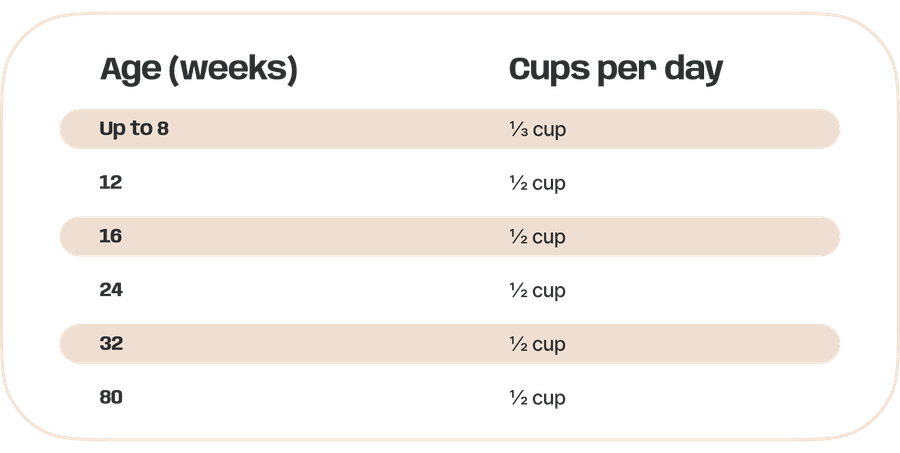
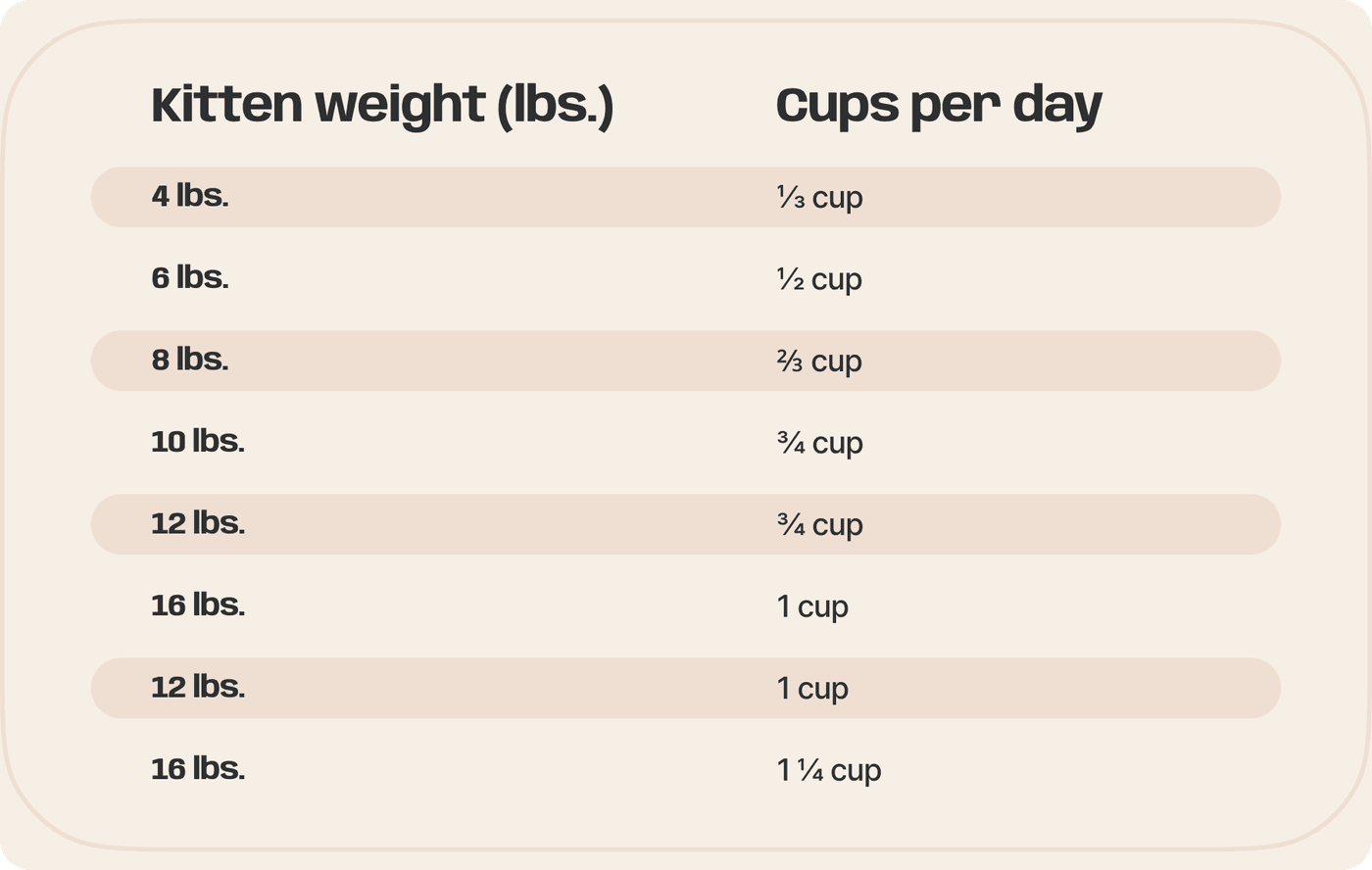
When deciding how much to feed your kitten, there are a few methods you can use. Age is the most straightforward, if you're pretty confident you know when your kitten was born. Weight is the second method and can be more appropriate for cats that might be above or below average.
See below for feeding guides based on your chosen method. Remember to divide the total recommended feeding amount by the number of times you feed your kitten per day to get the actual portion size per feeding.
Feeding an adult cat
Around your kitten's first birthday, it's time to make the switch to an adult cat food. The trickiest part of feeding an adult cat is adjusting your kitten-feeding habits to the mature animal your cat has grown into. As mentioned above, adult cats generally feed fewer times per day, so divide the recommended feeding amount by the number of times you plan to feed them during the day.
At the same time, you'll want to consider a few other factors.
What is your cat's activity level? Are they zooming around the house, or just going for long walks from the basement to the bedroom? The more active your cat is, the more energy (and food) they’ll need.
Is your cat eating treats? If your cat enjoys an occasional snack outside of their main meals, don't forget to factor those calories into the amount you're feeding them.
Wet or dry? Dry food is more calorie-dense, so if you plan to replace some dry food with wet food, make sure you're factoring in the difference.
Just like kitten food, you'll want your adult cat food to be specially formulated to suit their needs. For example, sodium is an essential nutrient that supports nerve and muscle function. And you probably already know that fiber is crucial to pushing food through your cat's digestive system.
All that's left is to give them the right amount of food. On average, the guidelines below should help you find a good baseline for feeding your cat.
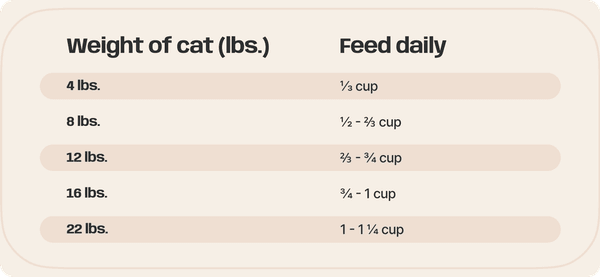
For wet food, be sure to consult the packaging to determine the right amount to give your cat each day. As a general rule, feed adult cats 3-4 servings per 5 pounds of body weight daily.

Feeding a senior cat
Around seven years of age, your cat should be ready to make the switch to a recipe for senior cats. Your cat will gradually begin to slow down as they age, and feeding them a diet designed for mature cats accounts for the burning of fewer calories throughout the day.
At this life stage, look for food that includes vitamins and minerals to support your cat’s aging immune system, muscles and heart.
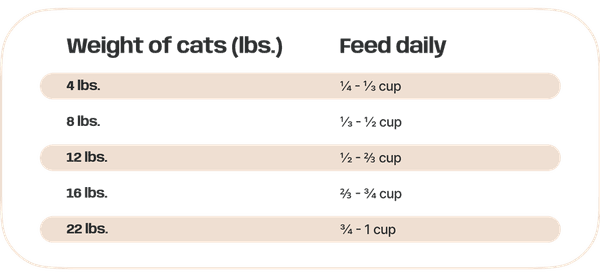
For a general idea of how much to feed your senior cat, follow the guidelines below.
That's a recipe for a happy cat
As a final thought, remember there are some foods and substances you should keep your cat away from, no matter what life stage they're at. These include acetaminophen (Tylenol), antifreeze, bleach, lilies, chicken bones, ribs, or other splintery bones, chocolate, garlic, onions, leeks, raisins, grapes or chives. It’s always best to stick with cat food and cat treats designed specifically for your pet’s nutritional needs.

Important Notice: The information provided on this page is for informational purposes only and is not a substitute for professional veterinary advice. Always consult a veterinarian with any questions regarding your pet's health or medical condition. Never disregard or delay seeking professional veterinary advice based on information from this page.